New project "ShiftAffect" studies emotion-sensing technologies
Researchers at the Hertie AI are now taking part in the interdisciplinary collaborative project “ShiftAffect – Shifted Boundaries”, which is funded by the German Federal Ministry of Research, Technology and Space until 2029.
Sadness, anxiety, and pain are among the experiences that affect us most directly. Technologies designed to detect, interpret, and influence such emotional states are increasingly being used, for instance, affective computing applications that infer emotional states from speech, facial expressions, or body language; virtual reality and neuromodulation techniques; and smartphone-based applications that track moods in everyday life.
ShiftAffect is based on the observation that such technologies can do more than simply help to alleviate anxiety, pain, or sadness. They also alter our understanding of what these conditions involve and where the line is drawn between a normal experience and a condition needing treatment. If an application presents sadness as a measurable pattern, or if a system flags anxiety as abnormal once a certain threshold is reached, it is not just the treatment that changes, but the category itself. These shifts, as demonstrated by the project’s subtitle ‘Shifted Boundaries’, are at the heart of the project.
The project examines the implications of these shifts for clinical practice, for the relationship between healthcare professionals and patients, and for society’s perceptions of normality, health, and illness. To this end, it combines philosophical, ethical, and conceptual analyses with empirical research and participatory processes, in which developers, clinicians, those affected, and other stakeholders work together to explore possible future developments.
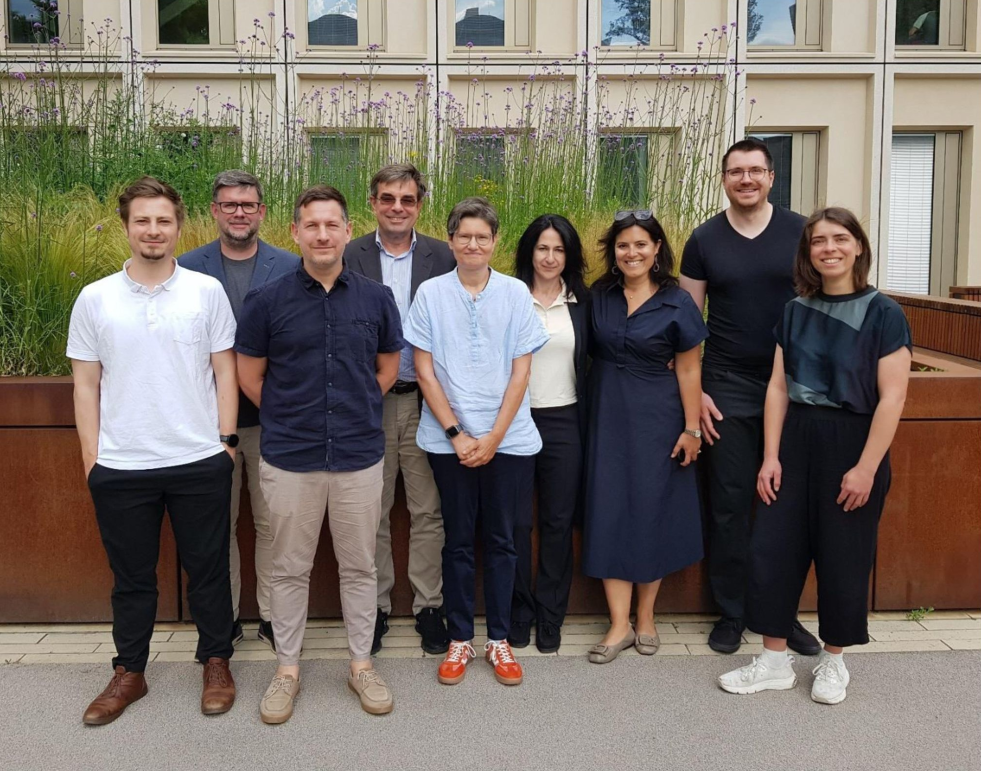
At the Hertie AI, Prof. Kerstin Ritter and Lydia Federmann are conducting empirical studies on the perspectives of developers of affective technologies. Their work is embedded in a broader collaborative network spanning the University Hospital Tübingen, the University of Cologne, the University of Münster, and the Institute for Technology Assessment and Systems Analysis at KIT.