BraTS Inpainting Challenge 2026: a record year in Strasbourg
BraTS Inpainting Challenge 2026: a record year in Strasbourg
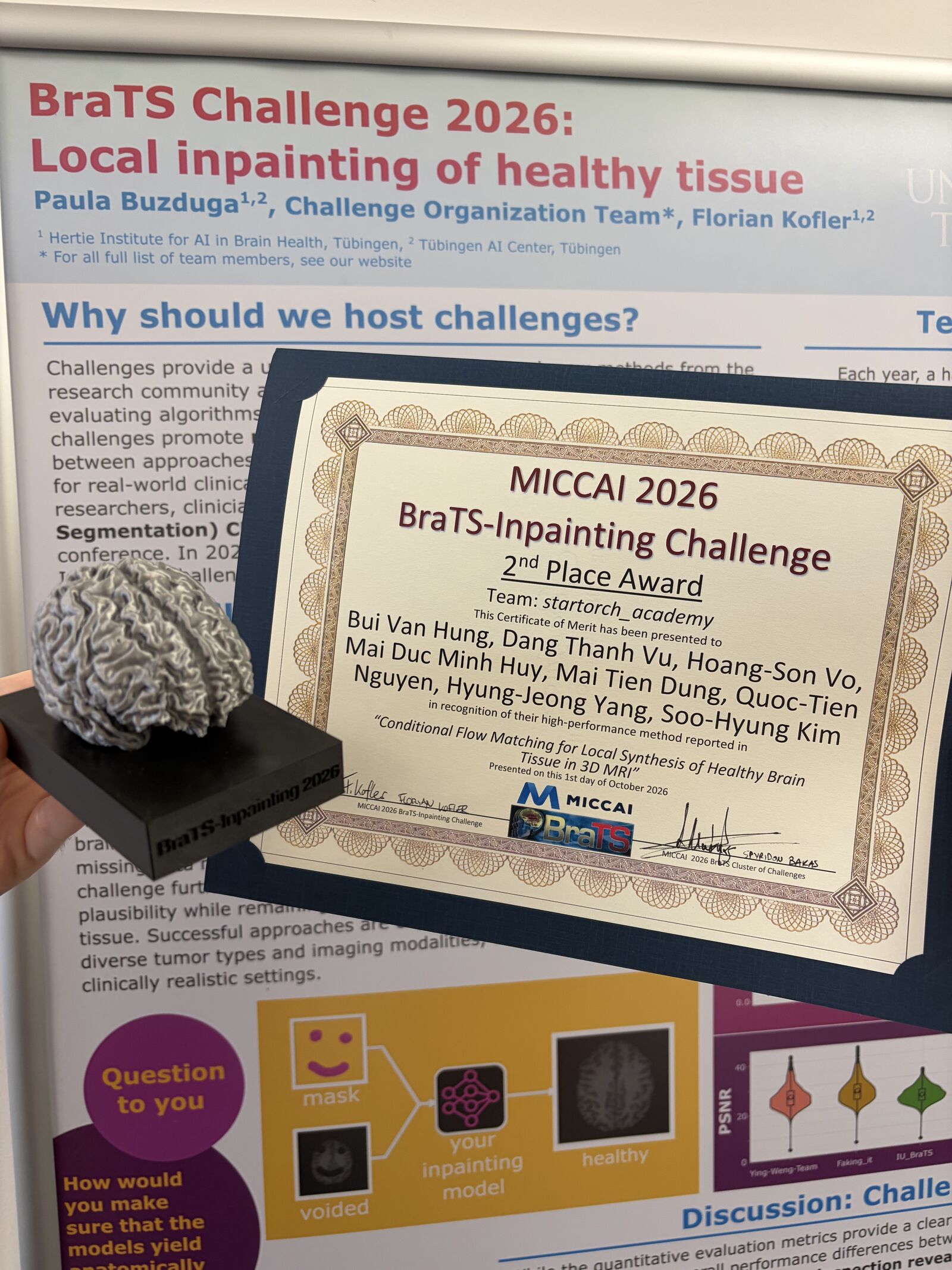
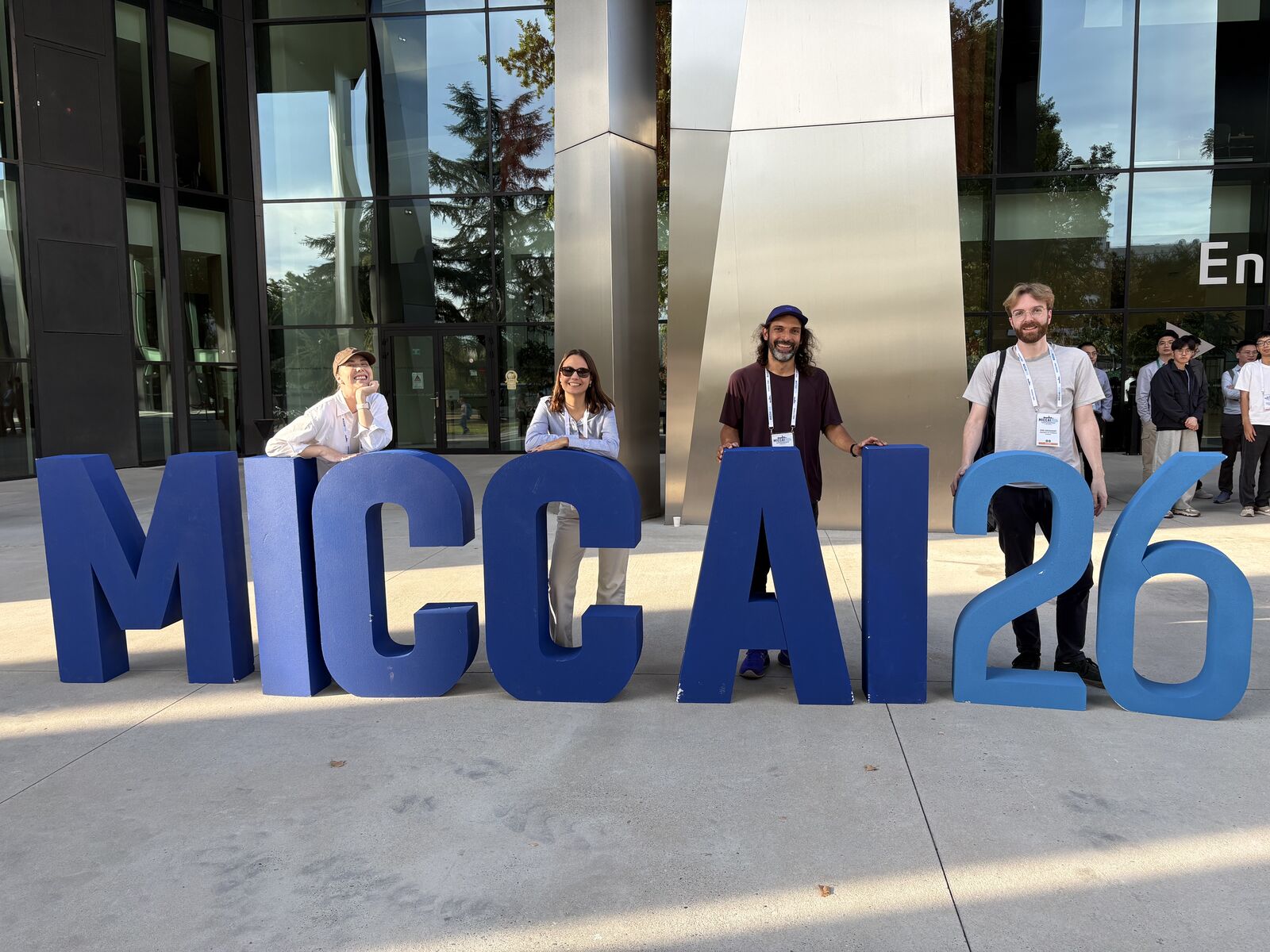
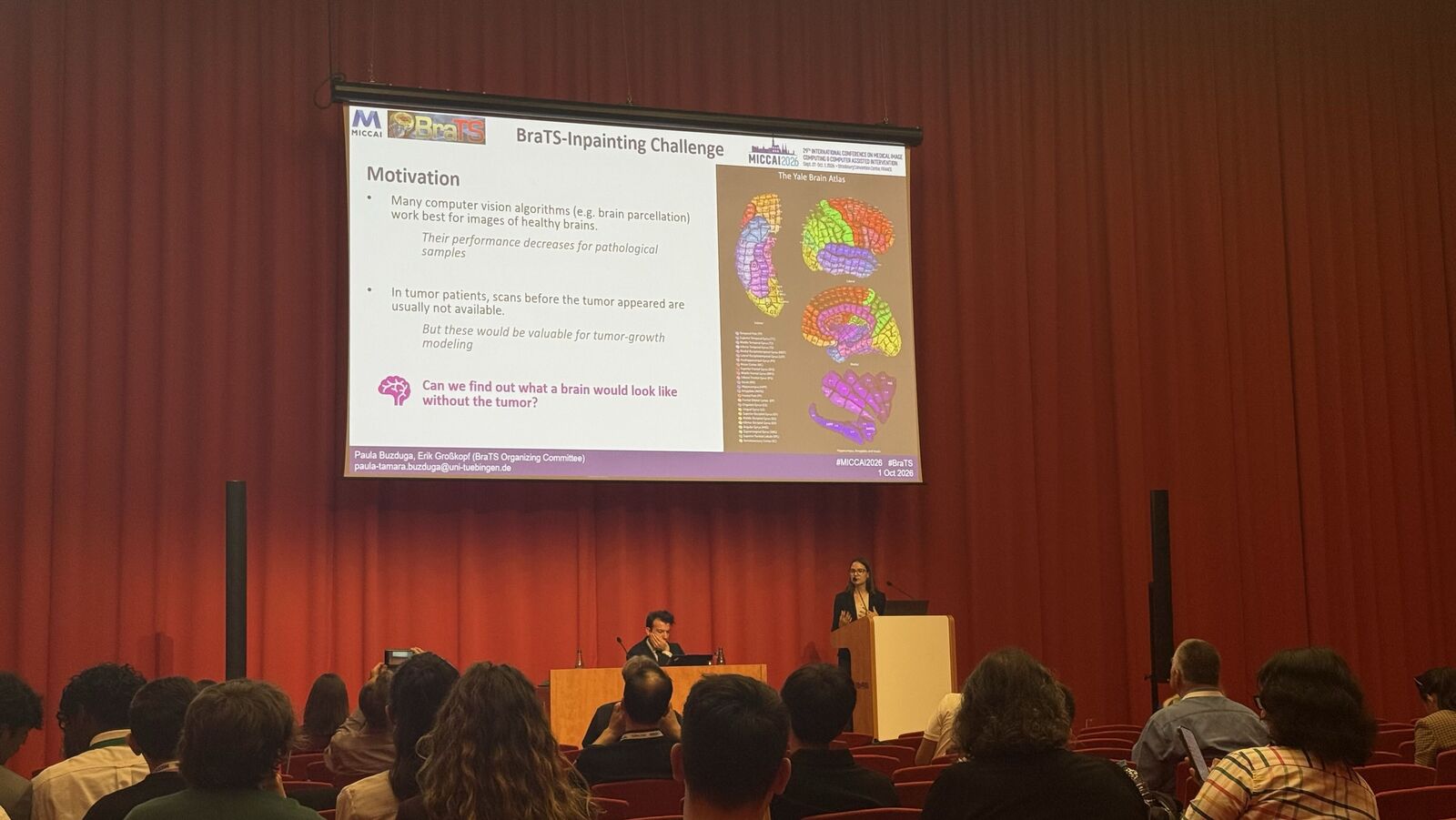
Each year, researchers in medical image analysis meet at MICCAI, the field’s largest conference. Alongside the talks, it hosts challenges: open competitions in which teams worldwide tackle the same problem on the same data. One of them, the BraTS Inpainting Challenge , was organised this year by Paula Buzduga, Erik Großkopf and Dr. Florian Kofler, all from Hertie AI, and concluded in Strasbourg in late September with twice as many teams as the year before.
The task sounds unusual: participants receive MRI scans of brain tumour patients with a region masked out, and their models must fill it with healthy tissue, as it looked before the tumour grew. This matters because everyday neuroimaging software, from registration to parcellation and segmentation, assumes a healthy brain and fails on scans with a large glioma, a type of brain tumour. Instead of adapting every tool to pathology, the challenge asks whether the missing tissue can simply be synthesised, making existing pipelines usable for tumour patients without any retraining. The generated tissue must be anatomically plausible enough not to mislead those tools, and the task is fully three-dimensional: models work on whole volumes rather than single slices, far harder than 2D inpainting. Four editions in, it remains unsolved. Part of the ASNR-MICCAI BraTS series since 2023, it attracts a strikingly broad range of approaches, from diffusion models and transformers to U-Net variants, patch-based pipelines and a variety of masking strategies, all documented in accompanying papers .
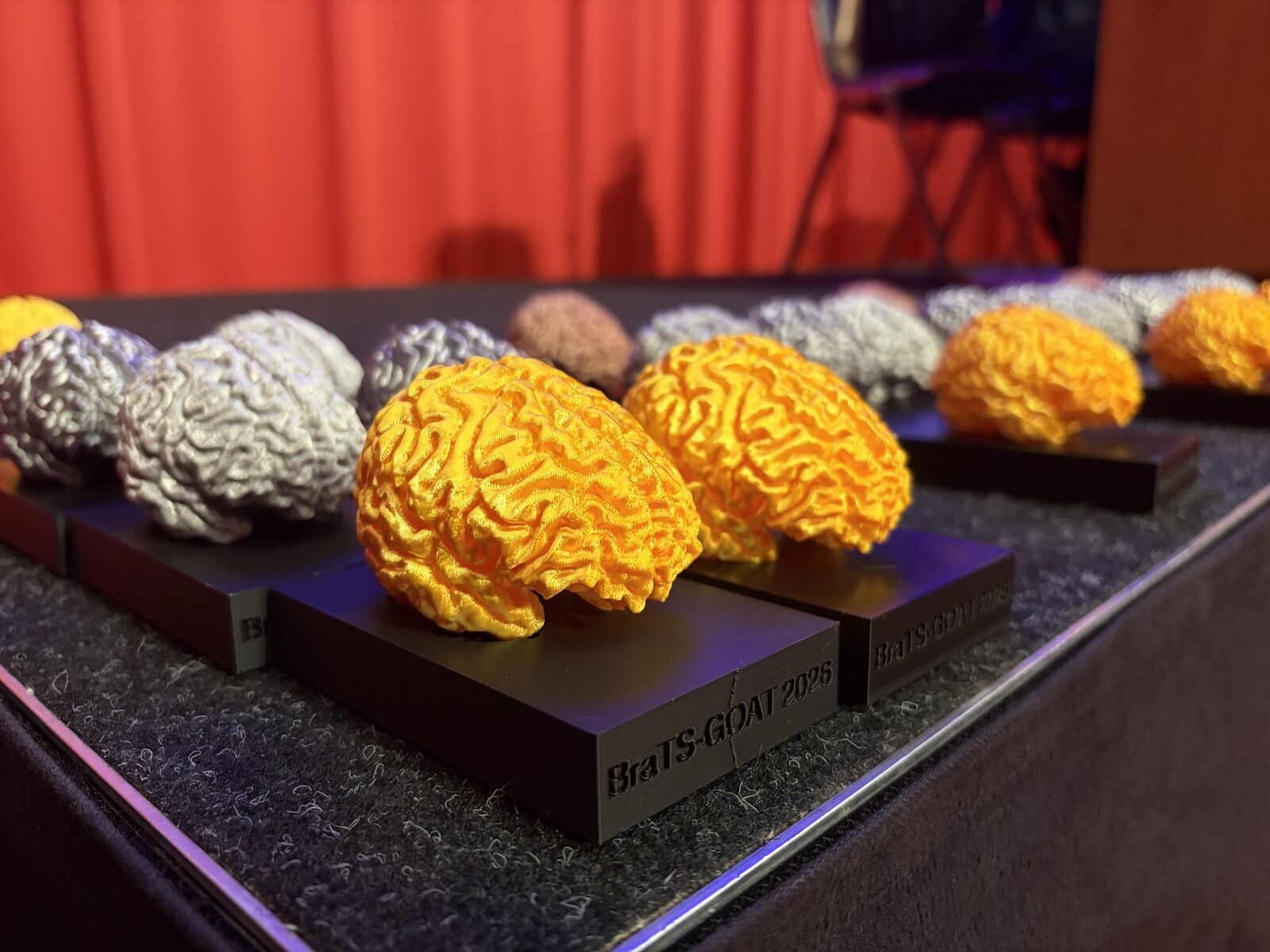
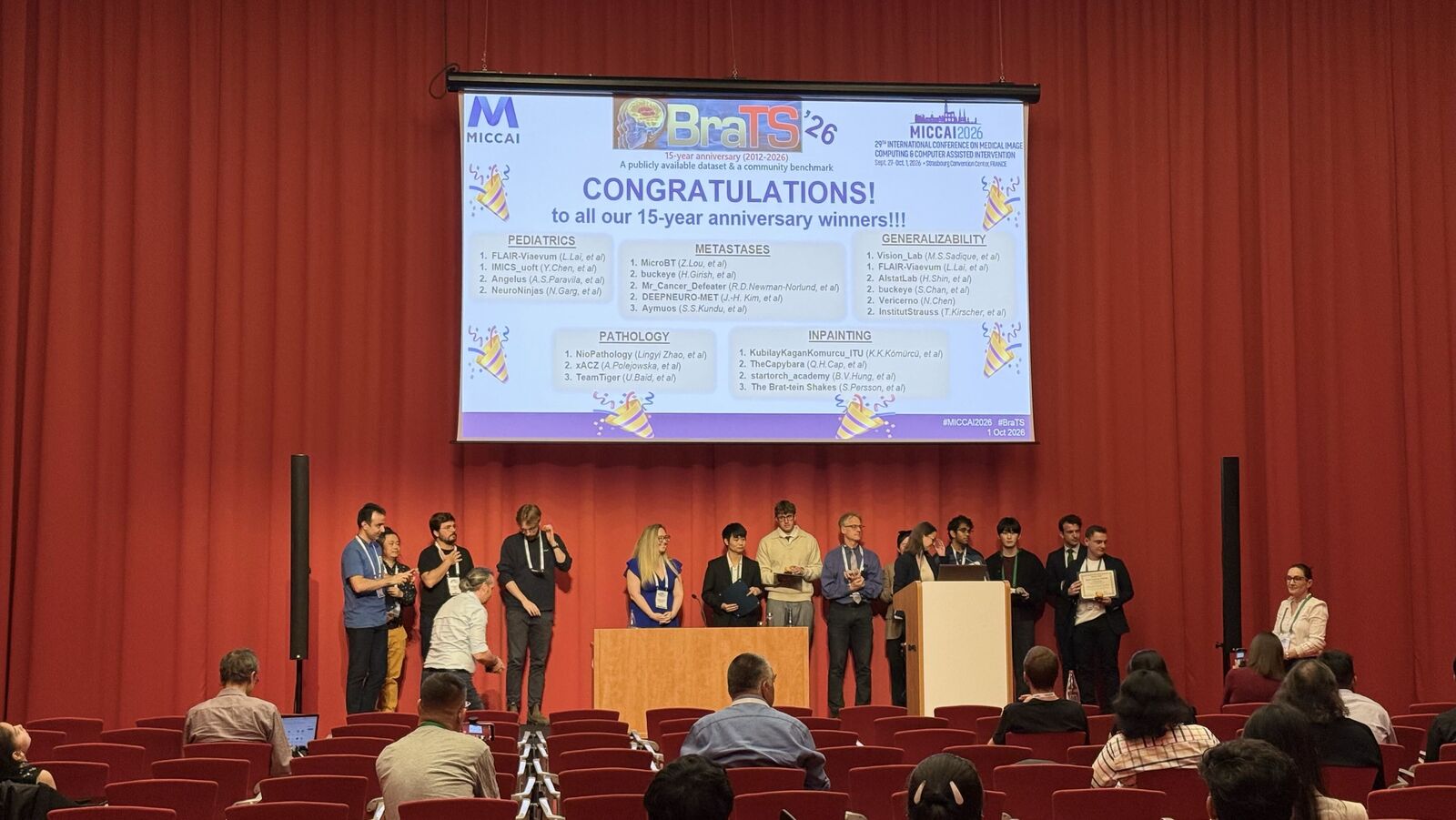
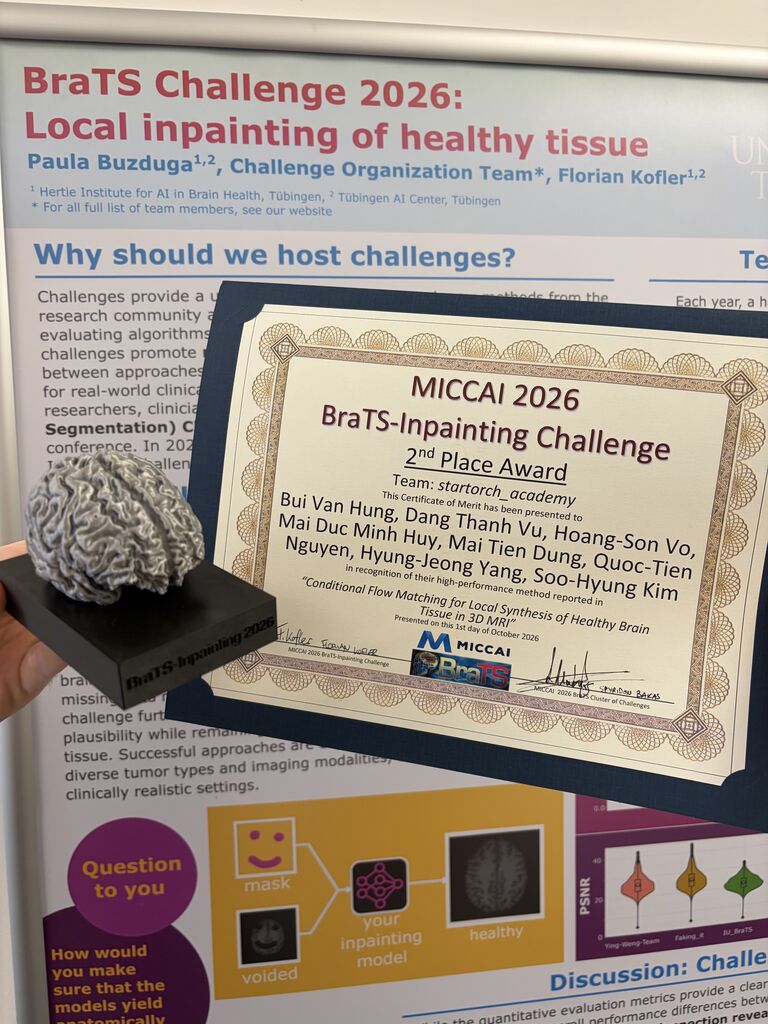
The session in Strasbourg was one of the highlights of the year. Teams presented their methods to an engaged audience, and the discussions that followed were lively and genuinely productive, with insightful questions and valuable feedback. The final ranking, kept secret until the last moment, was revealed on stage, and the event closed with an award ceremony. All winning methods are available through the BraTS Orchestrator, an open-source Python package that lets anyone run the top-performing algorithms from the BraTS challenges on their own data with a few lines of code. The response from participants was overwhelmingly positive, and their ideas are already shaping the next round.
The BraTS Inpainting Challenge returns in 2027, and newcomers are just as welcome as returning teams: whether a group is defending a leaderboard position or trying generative modelling on medical images for the first time, there is a place for it in the next edition!
Share article
Author
Paula Buzduga
 Paula works at the intersection of artificial intelligence, biomedical image analysis, and clinical applications. Her research focuses on deep learning methods for medical image segmentation and reconstruction, particularly in MRI and brain imaging. With a background in physics, she approaches these challenges from a strong analytical and quantitative perspective, focusing on extracting meaningful information from complex medical imaging data. She is particularly interested in integrating human expertise into AI systems, for instance through radiologist-informed training strategies and eye-tracking studies, to develop models that are not only accurate but also interpretable and clinically meaningful. Alongside developing accessible open-source tools and translational approaches, she aims to contribute to more diverse, inclusive, and collaborative research environments and to help bridge the gap between methodological innovation and clinical impact.
Department
Images